The short answer
Start on the business's own website: in LeadLists data, 54.9% of the emails we traced came from the business site (contact, about and team pages), 18.1% from its Facebook page. 65.8% of 285,744 small businesses publish an address that isn't a shared inbox like info@. When you only have a name, the most common patterns are flast@ (29.4%) and first.last@ (21.1%).
Owners of small businesses are easier to reach than people at big companies. There is no gatekeeper team, the website is often a template they filled in themselves, and many put their own address right on the contact page. The work is in knowing where to look and in checking what you find.
The numbers in this guide come from 323 of the ready-made lists we build and sell: 285,744 small and local businesses across 75 industries, with 479,413 email addresses found on their websites and profiles. System inboxes like noreply@ and webmaster@ are excluded.
Where small business owners publish their email
We traced where each address in our files was found. For 59% of them the source page was recorded, and the split is clear: the business's own website wins, and Facebook is a strong second. Contact pages matter, but more addresses sit on other pages of the site: service pages, footers, staff bios and privacy policies.
Where the emails were found (share of addresses with a recorded source)
Industry decides how often you'll succeed. Banks, colleges and law firms publish personal addresses on their own domain for most locations. Restaurants, car dealerships and auto repair shops rarely do, so expect a shared inbox, a Gmail account or nothing. The full email rates by industry are in which industries publish email addresses.
Businesses with a personal-looking address on their own domain, by industry
Six ways to find the owner's email
The order to work in
- 1Websitecontact, about, team, footer
- 2Patternfrom any staff address
- 3Listingsowner replies to reviews
- 4License recordsthe owner's legal name
- 5Social profilesFacebook About tab
- 6Check itverify before you send
1. The business website
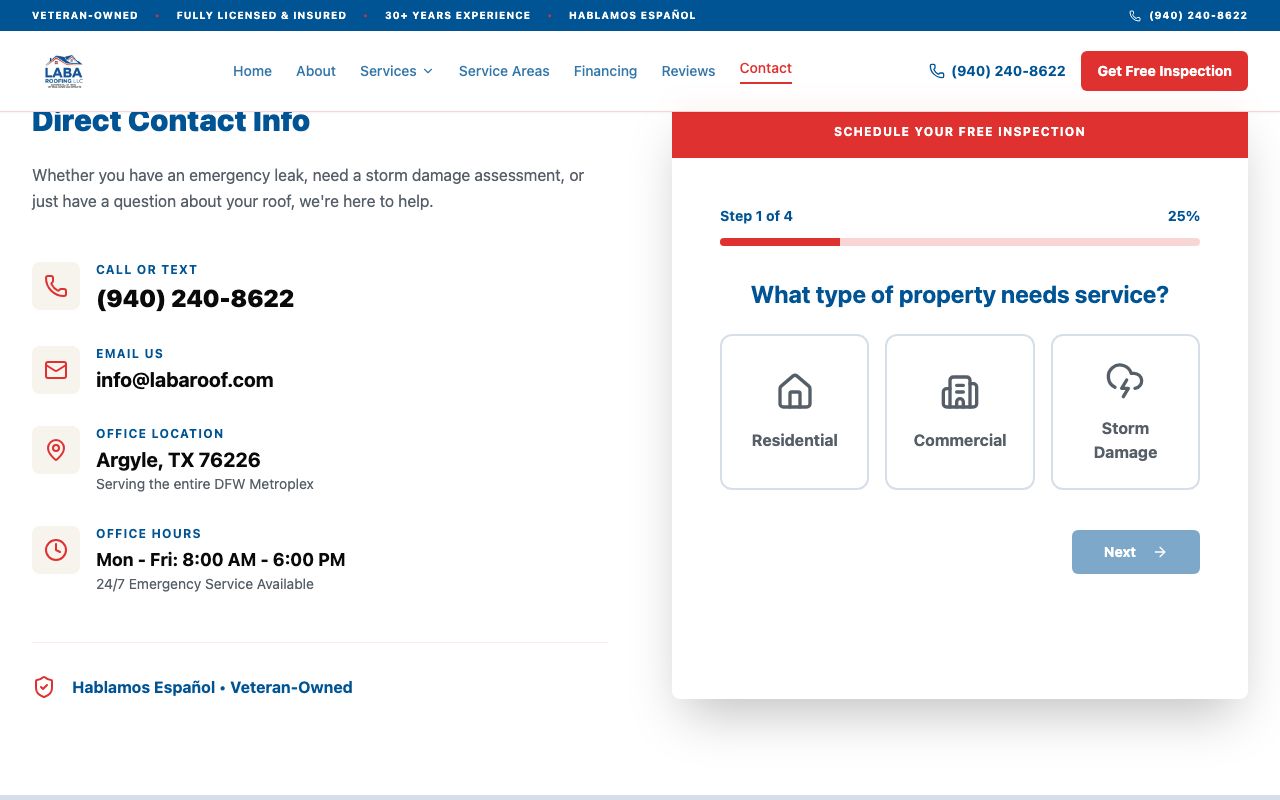
Open the contact page first, then the about and team pages, then scroll to the footer. Owner-run sites often list one address in the footer and a different, personal one on the about page ("Questions? Email me at..."). Check the privacy policy too; it often names a real person as the contact. If the address is hidden behind a contact form, view the page source and search for "mailto:". Contact pages like the one below are the easy case.
2. Work out the address pattern
If you know the owner's name but not their address, find any other address on the same domain and copy its pattern. We matched personal addresses in our files against the person's name to see which patterns small businesses actually use. flast@ (jsmith@) is the most common, then first.last@ and first@. Firms of one or two people lean on first@; offices with staff lean on flast@.
| Pattern | Example for Jane Smith | Share |
|---|---|---|
| flast@ | jsmith@ | 29.4% |
| first.last@ | jane.smith@ | 21.1% |
| first@ | jane@ | 18.2% |
| f.last@ | j.smith@ | 5.4% |
| firstlast@ | janesmith@ | 2.4% |
| last@ | smith@ | 2.1% |
| firstl@ | janes@ | 1.9% |
| Something else (nickname, initials, numbers) | js2@, jsmithcpa@ | 17.9% |
Almost one address in five fits no pattern, so a guessed address is a hypothesis, not a lead. Always check a guess before sending (step 6).
3. Map listings and review sites
Map listings rarely show an email, but they give you the website, and the owner often signs replies to reviews with a first name. A reply signed "Mike, owner" plus a site with mike@ in its footer is a match. Review sites and the local chamber of commerce directory sometimes list the owner's name next to the business.
4. State license lookups
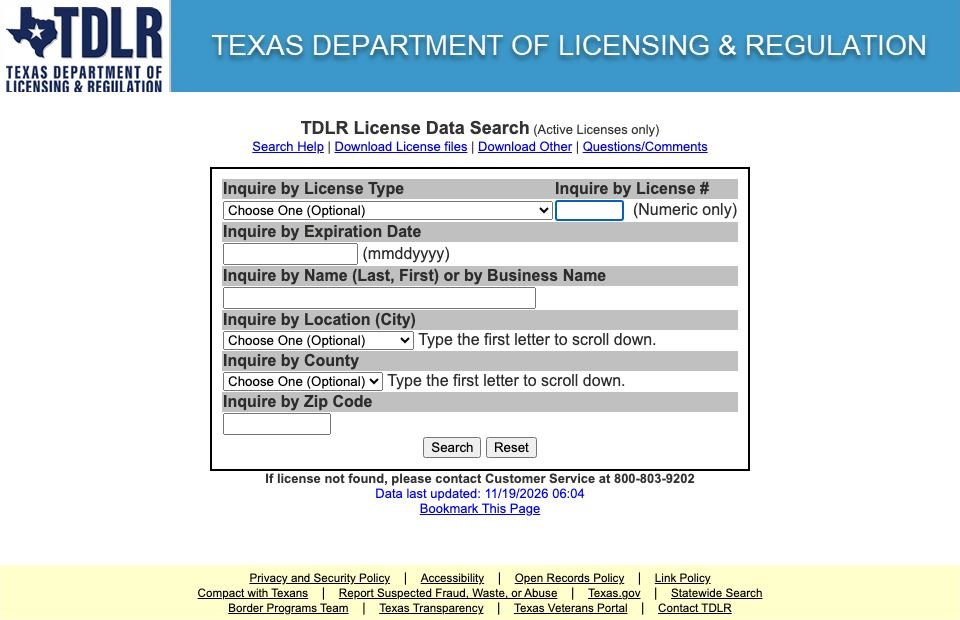
Licensed trades and professions are listed with the state: contractors, electricians, CPAs, real estate agents, dentists, cosmetologists. The license record gives you the licence holder's legal name and often the business address, which you then pair with the domain pattern. Some boards also let you download the whole file.
The secretary of state's business search is the other public record worth a minute. LLC and corporation filings name a registered agent and often an organizer or officer, which tells you who owns the business when the website doesn't.
5. Social profiles
Facebook is the second-biggest source of emails in our data: 18.1% of traced addresses came from a business's Facebook page, usually from its About section. Instagram bios and LinkedIn company pages help less with the address but give you the owner's name and role. LinkedIn is also how you confirm the person still runs the place. More on this in social media prospecting for local businesses.
6. Check the email before you send
A found address can be years old; a guessed one may not exist. Run every address through a verifier, which checks the syntax, that the domain accepts mail, and that the mailbox answers. Treat "catch-all" results with care: the server accepts everything, so the check can't confirm the person. The full process, with real verifier prices, is in how to verify an email list.
Is it really the owner's address?
Finding an address is half the job. Before it goes in your list, give it four quick checks. They take seconds per lead and save you from writing "Hi Mike" to someone who left two years ago.
- Domain match. The address should sit on the same domain as the website. In our files 74.3% of businesses with an email have one on their own domain. An address on a different company's domain usually belongs to a web designer, a franchise office or a former employer.
- Freshness. Look at the copyright year in the footer and the date of the last Facebook post. A site last touched in 2019 often lists an address nobody reads.
- Role. A name on the team page next to "Owner", "Principal" or "Office manager" tells you who you are writing to. A name with no title might be a part-time assistant.
- One person, one business. If the same personal address shows up on several unrelated businesses, it belongs to an agency or a franchise head office. Leave it out.
When there's no email to find
26.5% of the businesses in our lists publish no email anywhere we could find. Don't force it. 89.1% of those businesses list a phone number, so call, ask for the owner by name and ask for the best address to send details to. That one call often beats an hour of guessing. Our cold calling guide covers what to say.
If the business only publishes info@, write to it anyway and ask to be pointed to the right person. At a small office the owner or office manager reads it. See info@ vs personal email addresses for which to email first.
When a tool or a list is faster
Doing this by hand is fine for 20 businesses. At 500 it is a week of tabs. There are two shortcuts. Email-finder tools like Hunter take a domain or a name and return a likely address; Hunter's Starter plan is $49 a month for 2,000 credits, one credit per email found. They work best on companies with many staff on one domain, and less well on a two-person shop whose address lives on a Facebook page.
A ready-made list does the whole job for one industry in one area: every business, its website, phone and the best address found across the site, Facebook and other sources, ranked and checked. Advertising agencies in New York is 907 businesses for $29, about 3 cents a row. Before you buy any list, run it through our lead list quality checklist. If you would rather build it yourself, how to build a local business lead list walks through it, and buy vs build does the maths.